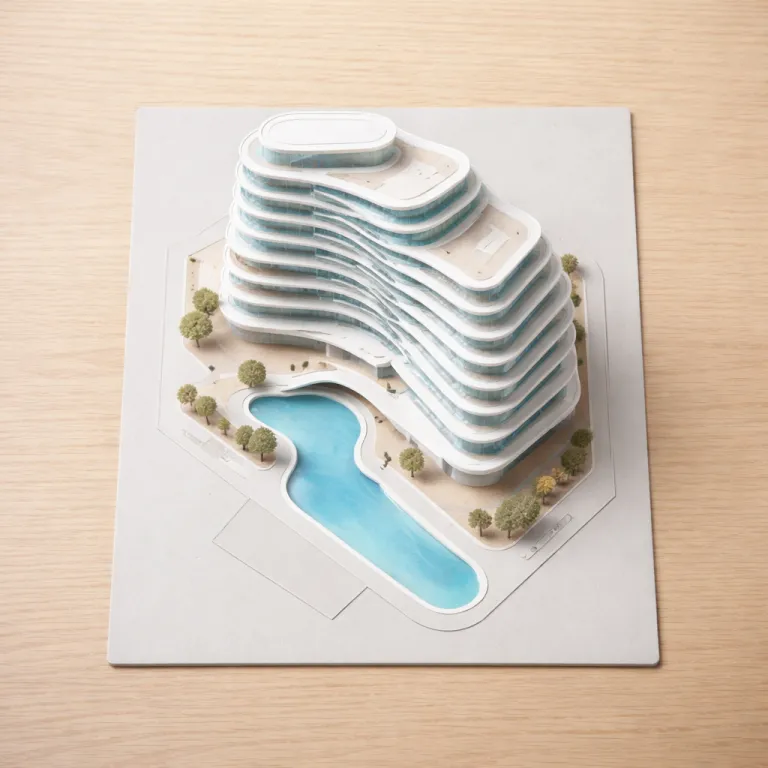
When luxury hotel architecture design becomes the main reason to stay
Some properties are not just places to sleep; they are destinations where the architecture of a luxury hotel defines the entire stay. The best high-end hotel projects treat the building as a narrative instrument, using hotel architecture, interior design, and landscape to tell you exactly where you are before a single word is read. For discerning guests choosing between many hotels, this architectural clarity often separates a pleasant stay from a stay that quietly changes how you think about travel.
Architects such as Frank Gehry, Ludwig Mies van der Rohe, Tadao Ando, and Sylvestre Murigneux have reshaped what a luxury hotel can be, each with a distinct design concept. Gehry’s Hotel Marqués de Riscal in Spain, opened in 2006 with its tilted titanium ribbons, is a masterclass in sculptural design that turns a working winery into a living artwork for guests; the 61-room property is now part of The Luxury Collection. Mies van der Rohe’s 1973 tower that now hosts The Langham Chicago, a 316-room hotel since 2013, shows how a mid-century International Style building can be reinterpreted as a calm, riverfront retreat without losing its rigorous modernist hotel design language.
In Japan, Tadao Ando’s W Osaka, inaugurated in 2021 with 337 rooms and suites, uses a minimalist black façade to conceal vivid interiors, proving that a strong design concept can balance restraint and theatricality for every guest. In the French Alps, Maya Hotel Courchevel 1850 by Sylvestre Murigneux blends Japanese Zen lines with Monegasque luxury, creating a hotel where indoor–outdoor transitions feel effortless after a day on the slopes; the 38-key retreat feels closer to a private chalet than a conventional resort. These hotels collection examples demonstrate how architecture, room design, and carefully framed views can become the primary filter when you check options on any serious luxury travel platform.
Reading the building: what architecture reveals before you book
Long before you arrive at a luxury hotel, its architecture already speaks to you through photographs, plans, and even satellite views. The façade, proportions, and relationship between public spaces and private areas quietly reveal whether the design concept prioritises spectacle, comfort, or a credible balance of both. When you read a property page on a luxury and premium booking website, learning to decode these signals is one of the most reliable ways to check if the experience will match the price.
Start with context and scale; a thoughtful luxury hotel will sit in dialogue with its surroundings, not in denial of them. Hyper-local hotel development trends now favour design concepts that honour regional building techniques, local stone, and vernacular rooflines, rather than importing anonymous glass towers that could belong to any real estate market. This is where adaptive reuse shines, as seen in historic palaces and landmark conversions analysed in depth in our guide to heritage palace or new build luxury, where hotel architecture becomes a form of living cultural preservation.
Next, look at circulation and living spaces; strong hotel design will show clear, intuitive routes from arrival to lobby, from spa to restaurant, and from public lounges to private suites. When floor plans or photography reveal awkward corridors, cramped dining rooms, or windowless spas, that usually signals a design studio that prioritised visual drama over guest comfort. By contrast, hotels that integrate indoor–outdoor transitions, layered room design, and coherent interior design palettes tend to deliver calmer stays, especially for couples planning longer travel itineraries. As one frequent guest told us after a recent anniversary trip, “I knew we’d chosen well when I could find the spa, the bar, and our room without ever having to ask for directions.”
Architectural storytelling across continents: from vineyards to city gates
Some of the most compelling luxury hotel architecture design today comes from properties where the building’s story is inseparable from its location. In Spain’s Rioja region, Hotel Marqués de Riscal by Frank Gehry rises above the vineyards like a piece of contemporary art, yet its metallic ribbons echo the colours of wine and sunlight in a way that feels rooted rather than arbitrary. This is design architecture that understands real estate as landscape sculpture, giving guests constantly shifting views that change with the weather and the time of day.
In London, the transformation of Admiralty Arch into a Waldorf Astoria shows how hotel development can turn an Edwardian gateway into an international hotel address without erasing its civic gravitas. Our in-depth review of this project, available in the feature on London’s most storied new address, explains how arches, corridors, and ceremonial staircases were reinterpreted as intimate living spaces for the modern guest. Here, hotel architecture becomes a narrative about empire, reinvention, and the subtle luxury of walking through history on your way to breakfast.
Across the Atlantic, The Langham Chicago occupies a tower originally designed by Ludwig Mies van der Rohe, proving that mid-century modernism can host warm, contemporary hotel design without losing its disciplined geometry. The Mark Hotel in New York, with 106 rooms and interiors by Jacques Grange, shows how a strong design studio can refresh an existing hotel while preserving its Upper East Side character; the 1927 building was reimagined as a contemporary grand hotel in 2009. These hotels collection examples illustrate how design hotels can be both architectural landmarks and deeply functional places to sleep, dine, and simply be, rather than museums with check-in desks.
Inside the story: how interiors, dining, and spa spaces extend the architecture
Exterior architecture may set the tone, but the narrative of a luxury hotel is completed by its interiors, restaurants, and spa rituals. When interior design is treated as a separate layer from the building, guests often feel a subtle disconnect between what they saw from the street and what they experience while living inside. The most successful design hotels align room design, fine dining spaces, and wellness areas with the same design concept that shaped the façade and structure.
Take The Mark Hotel, where Jacques Grange’s interiors translate a classic Manhattan shell into a series of crisp, graphic spaces that still feel residential and private. Here, hotel design uses bold art, tailored furniture, and carefully calibrated lighting to create a sense of intimacy that suits both couples on a city break and long-stay guests. In mountain retreats such as Maya Hotel Courchevel 1850, the spa, restaurant, and lounges echo the Japanese Zen and Monegasque luxury influences of the architecture, with indoor–outdoor relaxation decks and dining terraces that keep you visually connected to the slopes.
Even in urban towers, thoughtful design architecture ensures that fine dining rooms, cocktail bars, and spa studios are not buried in basements but positioned to capture meaningful views. When you read a property description, check whether the restaurant, spa, and design studio crafted spaces that relate to the building’s structure or simply filled leftover real estate. A coherent luxury hotel will make you feel that every corridor, every private nook, and every dining table continues the story that began at the entrance, rather than interrupting it with generic décor.
Comfort versus spectacle: when design serves the guest
Architectural ambition in a luxury hotel is only worthwhile when it enhances comfort, privacy, and ease of movement. There is a fine line between a striking design concept that frames memorable views and a showpiece building that exhausts guests with impractical layouts. The most reliable test is simple; ask whether every design decision improves how you sleep, bathe, dine, and move through the hotel during real travel days.
Properties such as Piaule Catskill in New York State, built as a series of minimalist cabins, show how hotel architecture can be both visually pure and deeply restful. Each cabin is a quiet design studio in itself, with floor-to-ceiling glass that turns the forest into living art while maintaining a strong sense of private retreat. This kind of indoor–outdoor connection, when combined with sustainability-focused materials and efficient room design, often delivers more genuine luxury than a lobby filled with chandeliers.
By contrast, some international hotel projects still prioritise atrium theatrics and oversized restaurants over acoustics, natural light, and intuitive circulation. When you check photos, look for clues such as generous window seats, sheltered balconies, and spa areas with real daylight rather than coloured LEDs. Our detailed review of Conrad Tokyo, in the feature on elevated urban luxury in Tokyo, highlights how a skyscraper hotel can balance dramatic architecture with quiet, guest-centric living spaces that feel almost residential.
How to use architectural clues when choosing your next stay
For couples planning a high-stakes trip, learning to read luxury hotel architecture design is one of the most effective ways to filter options. Start by asking whether the hotel’s architecture could exist anywhere, or whether it clearly belongs to its city, coastline, or mountain valley. Hotels that embrace local materials, regional craft, and sustainability in both structure and interior design usually offer a richer sense of place than those chasing generic glamour.
Pay attention to how many spaces are oriented toward meaningful views, not just the most expensive suites. A thoughtful luxury hotel will give even entry-level rooms a considered room design, with good light, intelligent storage, and at least one framed outlook that reminds the guest why they travelled. Public areas should feel like extensions of your own living room, with restaurants, lounges, and spa zones that invite lingering rather than simply processing hotel guests through the travel industry machine.
Finally, remember that “What defines a luxury hotel with storytelling architecture? Hotels where design elements narrate unique cultural or historical stories.” When you read about a property, check whether its architecture, dining philosophy, and spa rituals are described as part of a coherent narrative or as separate amenities. The more clearly a hotel can articulate its design concept, from hotel architecture to interior design and service rituals, the more likely it is that your stay will feel curated rather than improvised.
Key figures in storytelling hotel architecture
- The Mark Hotel in New York offers 106 rooms, a relatively intimate scale for a city luxury hotel, which allows its design studio and service équipe to maintain a highly personalised guest experience.
- The Langham Chicago occupies a tower designed by Ludwig Mies van der Rohe, a mid-century landmark that demonstrates how existing real estate can be reimagined as a contemporary luxury hotel without losing architectural integrity.
- Hotel Marqués de Riscal opened as part of a wider winery development, showing how hotel architecture can anchor a regional tourism strategy and extend the living story of a working vineyard.
- Piaule Catskill, opened as a nature-focused retreat, reflects the travel industry shift toward sustainability, with cabins designed to minimise impact while maximising forest views for every guest.
- Maya Hotel Courchevel 1850, designed by Sylvestre Murigneux, illustrates how international hotel projects now blend Japanese Zen influences with Alpine materials to create design concepts that feel both global and hyper-local.
FAQ: luxury hotels where architecture tells the story
What defines a luxury hotel with storytelling architecture ?
A luxury hotel with storytelling architecture is one where design elements narrate unique cultural or historical stories. In practice, this means the architecture, interior design, and room design all work together to express a clear concept rooted in the location. Guests feel this narrative from arrival through dining, spa rituals, and even the way corridors frame everyday views.
Which architects are known for designing such hotels ?
Frank Gehry, Tadao Ando, and Ludwig Mies van der Rohe are frequently cited for hotels that embody this approach. Their work on properties like Hotel Marqués de Riscal, W Osaka, and The Langham Chicago shows how strong design architecture can transform hotels into cultural landmarks. When you check a property’s background, seeing these names or similarly respected architects is often a reliable quality indicator.
How does architecture enhance the guest experience ?
Architecture enhances the guest experience by creating immersive environments that reflect cultural narratives. Thoughtful hotel architecture shapes light, acoustics, and circulation so that guests move intuitively between private rooms, restaurants, and spa areas. This reduces friction during travel and allows the luxury hotel to feel like a coherent living space rather than a collection of unrelated venues.
Are there eco friendly luxury hotels with unique architecture ?
Yes, many high-end properties now incorporate sustainable materials and practices. Projects such as Piaule Catskill and several new design hotels in Europe use timber structures, high-performance glazing, and low-impact foundations to align sustainability with high-end comfort. For travellers, this means you can prioritise both environmental responsabilité and elevated design when choosing hotels.
Can guests participate in architectural tours at these hotels ?
Some hotels offer guided tours showcasing their design features. These experiences might include behind-the-scenes visits to normally private areas, explanations of design concepts by the in-house design studio, or curated walks through surrounding real estate that inspired the project. When you read a hotel’s description, look for mentions of such tours if architecture is a key reason for your trip.