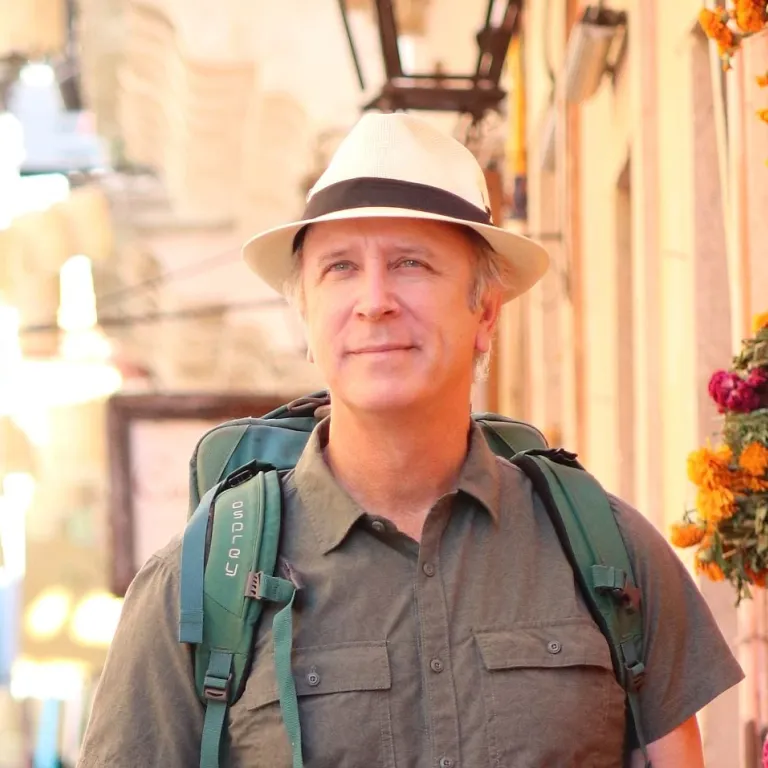
Tim, you’ve been running online travel publications since the early 2000s—Perceptive Travel, Cheapest Destinations Blog, and now Al Centro Media as an umbrella—how do you personally define “success” in online travel media today, and how has that definition evolved over your 25+ years in the field?
I have always defined success as doing work that I'm proud of, reaching a respectable number of readers who care, and earning enough money to support the lifestyle I have designed for myself. If I can wake up on Monday and be excited about going to work, which has been true since I left the corporate world to go full-time in 2006, then mission accomplished. It's still fun and I'm doing well financially, living where I want and traveling a lot, so that's success to me.
You operate several distinct travel brands—from a long-form narrative magazine to a budget travel blog and a digital nomad newsletter. What have you learned about building and sustaining profitable online travel properties with very different editorial voices and business models under one publishing company?
It's important to have a clear focus for every publication, an ideal type of person you're trying to reach. So a general blog or online magazine that attempts to please everyone is not going to get many people excited. It's a mistake many beginning bloggers make, going wide instead of deep. When I got the urge to cover something different or saw a hole in the market I could fill, I simply started a new site with that focus instead of trying to graft it onto whatever existed already. Running five sites is not five times more work, thankfully, after they've all got some momentum. Plus then you have assets you can peel off and sell if you want to lighten your load and take equity out. I've sold two blogs over the years and got a nice windfall, and will probably do it more as I get older.
Many travel writers struggle to turn a personal blog into a durable media business. Can you walk us through a concrete example from your own portfolio—say, Cheapest Destinations Blog—showing the key decisions (editorial focus, SEO, monetization, partnerships) that turned it from “passion project” into a reliable revenue stream?
First of all, a personal blog is hard to monetize if it's only about a person unless you're already a celebrity. So who is this blog FOR then, the ideal reader with what specific interest? For every site, focusing on the core audience and gladly waving goodbye to those who don't belong has been a huge key to my success. Too many bloggers are focused on trying to score free trips or trying to pump up their total follower numbers on some social outlet to score partner deals. You can actually make a lot more money if you're hyper-focused on a specific audience and you can give those people the answers--and the products/services--that they are looking for. You'll also get more brands coming to YOU that way, especially if you're the clear leader in your niche. The Cheapest Destinations Blog started in 2003, back when there were very few ways to get the word out, so from the start I focused on building an e-mail list that I owned so I could reliably reach those people. I've continued with that emphasis, despite all the newer channels I'm on, rather than chasing the "rented land" of social media followers. That has paid off in a big way because the engagement rate is exponentially higher and those e-mail subscribers are much more likely to buy my books, hire me for consulting, or go on a tour with me. The other key decision I made last decade was to slow down the pace on new posts and do more updating and clean-up of old ones. I went from more than 2,000 posts down to 700 on that particular blog and I'm still finding junk in the attic now and then. I've gotten rid of most of the thin content (some dating back to the early '00s), beefed up what was there, and am updating more often instead of trying to come up with completely new articles constantly. All of this helped me sail through the HCU mostly unscathed and continue to get strong search traffic coming to authoritative, unique articles that don't exist elsewhere. I'm getting more traffic now across all my sites combined than I was in 2019, before anyone knew what havoc the HCU and AI would unleash for content creators.
With “Travel Writing 2.0” you argued writers must think like digital entrepreneurs. From your vantage point as both an editor and publisher, what are the most common strategic mistakes you see talented travel creators make when they try to succeed in online publishing, and how would you correct them?
This has gotten much better over the years as the amount of useful information has increased (helped in part by my Travel Writing 2.0 books' three editions, if I may say so myself). There are Facebook groups, courses, and conferences where bloggers can learn what's working and what's not and I don't get people looking at me funny anymore when I say, "You need to treat your blog as part of a real business." Travel bloggers as a whole are much more professional now than they were 15 or even 10 years ago, much more aware of what needs to get done to reach financial success. They're also finally listening when I repeat what I've been saying for 15 years: "You need multiple streams of income, hopefully 10 or more." Relying on one income stream, like Mediavine or Instagram brand deals, is incredibly risky, as many people found out the hard way.
You now co-edit Nomadico with Kevin Kelly, targeting remote workers and slow travelers. What does the performance and audience feedback from this newsletter tell you about current and future demand in the travel niche—what kinds of stories, formats, or business models are resonating most with this new generation of long-term travelers?
The success of Nomadico has blown me away, honestly. On an earnings per hour basis, it's the most lucrative thing I work on every month. I followed sister Substack newsletter Recomendo's format of quick recommendations and specific news items for that audience in a format that's easy to read when you open it--not something you have to hang onto until you have 20 minutes or more to get through it all. It showed me once again that newsletters are where the real money is found and that results-oriented brands are willing to pay to get in front of a well-defined audience that is actually paying attention instead of scrolling. We also do crazy well with affiliate ads there. I wrote about a stretchy no-metal belt for airport days I like and it sold almost 500 units through the Amazon link! That wasn't a fluke either: we've moved hundreds each of items I have recommended for working travelers: laptop stands, portable keyboards, travel-sized toiletry items, travel clothing, books...
Algorithms, AI-generated content, and shifting social platforms are reshaping how travel information is created and discovered. As a publisher who lives off this ecosystem, how do you see sustainable, human-led travel media surviving and thriving over the next five to ten years, and what specific strategies are you putting in place at Al Centro Media to stay ahead?
"Human," "authentic," and "unique" are not just buzzwords: they are content filters by which you live or die in today's content world. If you're still publishing generic listicles that an AI bot can produce in seconds based on all the blogs and online magazines it has stolen material from, then you're just not going to rank in search or gain readers who care enough to stick around or return. Bloggers need to lean into their expertise, personal experience, and reader connections to stay relevant and grow an audience. Do what the bots can't do, like tell stories, be opinionated, and talk about what your five senses picked up while in that destination. AI bots can only regurgitate what's already been published, so forge a new path and be truly different. Again, the overall numbers don't matter so much except for display ad revenue, which shouldn't be the #1 revenue source anyway. It's more important to publish material that answers your core audience's questions and to create articles that help them travel better, avoid mistakes, create better memories, etc. I barely do any keyword research anymore except to make sure I get the title right and see which similar phrases get searched more. But I'll write the article regardless if the idea came from a reader's question or blog comment because those tools are often wrong. I've written pieces that SEO tools say have zero search volume and now they're getting 500 search visits per month from people who are phrasing their question in 30 different ways. I've got the answers, in detail, so the first-time visitors often end up reading more, signing up for one of my newsletters, or bookmarking the blog.
For someone who dreams of building a viable online travel media brand—whether a blog, magazine, or newsletter—what brutally honest advice would you give them about where to start, what to ignore, and what habits or mindsets they absolutely need if they hope to still be publishing ten years from now?
On what subject can you realistically become one of the world's leading authorities if you're not one already? This is an easy goal if you start a focused regional/city blog, but obviously if you're not that localized, you need to pick a niche you can obsess over for years on end and still get excited about it. A general "Look at me I'm traveling the world" blog is terrible for this, but unfortunately it's the most common kind you'll run into, especially from newbies who think those are the kind of people succeeding just because they're so self-promotional and visible. If a blog is trying to appeal to everybody, it's appealing to nobody beyond random one-off searchers and has little chance of taking off until it becomes far more focused.
Learn more: https://alcentromedia.com/