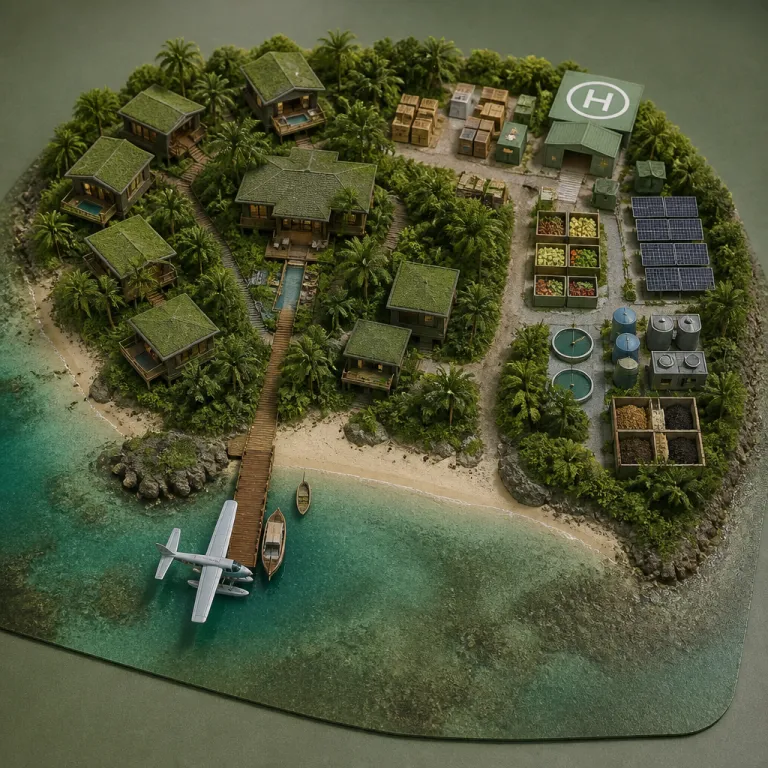
Inside the Hidden Engine of Private Island Luxury Hotel Operations
From a sun lounger, a private island resort can feel like the simplest place on earth. In reality, the calm surface hides a finely tuned system of island logistics, marine transport, and hospitality planning that runs closer to an offshore airline than a beach retreat. Every crate, every guest experience, every kilowatt of renewable energy is mapped out weeks in advance.
The hidden engine of private island luxury hotel operations logistics
On a remote island, nothing simply arrives; it is the result of meticulous planning that starts long before you book your villa. Food, fuel, spa products, and even the flowers in your accommodation dining spaces move through a chain of boats, barges, and sometimes seaplanes that would impress any logistics executive. This is where the real assessment of a luxury private stay begins, long before you taste the first welcome drink.
Consider Zannier Île de Bendor in the Mediterranean, where resort development has turned a private island into a Provencal-style village of villas and suites. The design maximizes cross ventilation to reduce air conditioning, which directly shapes both guest rest and long-term operating costs. According to Zannier Hotels’ own sustainability communications, that single design choice is part of a broader strategy to be eco friendly without compromising luxury or comfort.
For travelers comparing islands in North America, Latin America, South Africa, or the Indian Ocean, understanding these logistics is a form of personal market analysis. A private island resort that talks openly about its supply chain, renewable energy strategy, and spa wellness sourcing usually signals serious commitment to both service and sustainability. When you see that level of transparency, you are also seeing how the property protects its revenue and reputation in competitive global tourism markets.
Behind the scenes, a General Manager oversees operations and ensures smooth daily functioning while the Executive Chef manages the kitchen and creates gourmet menus that rely on this fragile supply chain. The Maintenance Team quietly maintains infrastructure so that water, power, and spa facilities feel effortless to you. Together, this équipe turns a remote island into a seamless luxury resort where the guest experience feels weightless, even though the logistics are anything but light.
Supply chains by sea and sky: how your breakfast reaches the beach
Every private island breakfast starts days earlier in a mainland warehouse. For a high-end resort, private island luxury hotel operations logistics translate into mapping each ingredient, from berries to champagne, against tides, customs checks, and storage limits. The goal is simple: your plate should never reveal the complexity behind it.
In practice, this involves constant market analysis of suppliers in nearby tourism markets and sometimes across continents. Resorts in Latin America might source specialty products from North America or Europe, while islands in the Indian Ocean balance Pacific private shipping routes with regional producers. Each decision affects freshness, cost, and ultimately the perceived value for high net worth individuals who expect flawless service.
Soneva Secret in the Maldives offers a sharp example, with just 14 villas and one private chef per villa crafting bespoke menus. Publicly shared Soneva figures note that such ultra-low key counts can push per-guest logistics costs far above regional averages. That level of personalization multiplies the logistical challenge, because each guest experience can demand different ingredients, cooking methods, and timing.
Fuel, building materials, and spa products follow the same pattern, but with longer planning horizons and higher risk. A storm that delays a barge can affect everything from air conditioning to spa wellness treatments, which is why serious resort development projects invest heavily in storage, redundancy, and renewable energy systems. Industry case studies from Indian Ocean islands describe multi-week buffer stocks for essentials, where eco friendly ambitions meet hard reality as solar arrays and desalination plants must be sized for both peak season and long-term resilience.
For travelers, the most useful assessment is often the most discreet one. Ask how often supply boats arrive, how the resort manages waste, and whether local suppliers are part of the chain; the answers reveal both environmental impact and the stability of operations. Properties that integrate local fishing communities or farmers into their accommodation dining story usually deliver fresher food and a more authentic sense of place.
Staffing a remote paradise: people, housing, and the human cost
No private island resort can function without a small, highly trained village of staff. In private island luxury hotel operations logistics, moving people is often harder than moving champagne. Every shift, every rotation, every rest day must be choreographed around boats, planes, and weather.
Most islands operate with a core équipe living on site for long-term periods, supported by rotating specialists for spa wellness, wellness coaching, and technical maintenance. Housing these teams requires its own real estate strategy, from compact staff villages to discreet apartments hidden behind the natural beauty of dunes or jungle. When you walk from your villa to the spa, you are often crossing a carefully planned line between guest spaces and staff infrastructure.
The financial commitment is significant, with monthly fixed costs for a serious luxury private island operation easily reaching several hundred thousand dollars and staff payroll representing a major share. Industry benchmarks from remote Indian Ocean and Pacific properties, cited in hospitality consulting reports, suggest that payroll alone can account for 30–40% of operating expenses, even before utilities and transport are factored in. These numbers explain why revenue management is so tight and why minimum stay requirements are common in ultra remote resorts.
Retention is another key point, because training a team to deliver consistent service on a remote island takes time and money. Properties courting high net worth individuals know that a familiar face at the jetty or spa can be the difference between a one-off visit and a decade of repeat bookings. This is where the objectives to provide exceptional guest experiences, maintain an exclusive ambiance, and ensure operational efficiency become more than marketing lines.
For travelers, asking about staff tenure and training is a subtle but powerful assessment tool. Resorts that invest in comprehensive planning, sustainable practices, and staff training usually handle pressure moments better, from sudden storms to medical issues. When you read previews of upcoming openings, such as the curated list of hotels worth booking before they open in this early access guide to future icons, pay attention to how clearly they describe their staffing philosophy.
Water, energy, and wellness: engineering comfort on the edge of the ocean
Fresh water on a private island is never a given. Behind every plunge pool and spa treatment, private island luxury hotel operations logistics rely on desalination plants, storage tanks, and careful engineering. The more effortless your wellness experience feels, the more complex the systems supporting it usually are.
Most serious resorts now combine desalination with renewable energy, using solar fields or wind to offset the heavy power draw of water production. This shift is not only eco friendly; it is also a long-term hedge against fuel price volatility and supply disruptions. When a resort talks about its investment in renewable energy sources, it is really talking about the stability of your showers, air conditioning, and spa wellness rituals.
Energy design also shapes architecture, as seen at Zannier Île de Bendor where cross ventilation reduces reliance on air conditioning. Similar thinking guides resort development in North America, Latin America, and South Africa, where natural beauty and climate can be harnessed to lower consumption without compromising luxury. For guests, this translates into quieter rooms, more open spaces, and a stronger connection to the island’s rhythms.
Wellness facilities add another layer of complexity, because spa water, heat, and product storage must all be managed on site. A spa that feels like a natural extension of the landscape, whether on a Pacific private atoll or a rocky Mediterranean island, is usually the result of rigorous analysis and engineering. The same systems that heat your plunge pool also protect the reef from thermal shock and chemical runoff.
Travelers who care about sustainability should ask direct questions about water and energy when choosing between resorts on different islands and markets. Properties willing to share their sustainability audit metrics, such as those discussed in this deep dive into what luxury hotels measure behind the scenes, tend to manage resources more responsibly. Your choice of resort becomes a quiet but meaningful vote for better tourism development.
The guest paradox and environmental scrutiny: privacy, connectivity, and impact
Guests arrive on a private island seeking silence and separation. At the same time, private island luxury hotel operations logistics must deliver instant connectivity, flawless service, and the sense that anything is possible at any point. Balancing those expectations is the defining art of modern island hospitality.
On one side, high net worth individuals want privacy, digital detox options, and the feeling of being far from any market or city. On the other, they expect Wi-Fi strong enough for video calls, streaming, and real-time market analysis of their investments. This tension shapes everything from antenna placement to the layout of accommodation dining terraces, where views must remain pristine even as technology hums in the background.
Environmental scrutiny is sharper on islands than almost anywhere else in tourism. A single mismanaged waste stream or fuel spill can damage fragile reefs and undermine the natural beauty that justifies the resort’s real estate value and nightly rates. Regulators know this, which is why environmental and building permits are non negotiable for any serious resort development.
Guests are part of this equation, because their choices influence which resorts thrive in global tourism markets. When you prioritize eco friendly operations, renewable energy, and transparent reporting in your own assessment, you reward properties that take a long-term view of both revenue and responsibility. As one operational guide for island hoteliers puts it without embellishment: "What are the main challenges? Logistics, staffing, and sustainability."
For travelers booking through a luxury and premium platform, the most useful filter is often the quietest one. Look for islands that talk about eco tourism, personalized services, and digital detox retreats while still being honest about limited connectivity and the need to book in advance. Respect local customs, ask precise questions about operations, and you will help shape a future where private islands remain both viable resorts and protected ecosystems.
Regional perspectives: how private islands differ across global markets
Not every private island resort operates under the same sky. Private island luxury hotel operations logistics look very different in North America, Latin America, South Africa, and the wider Pacific private sphere. For travelers, these differences translate into distinct experiences, costs, and levels of remoteness.
In North America, many private islands sit relatively close to established tourism markets, with shorter supply routes and more robust emergency infrastructure. This proximity can mean more reliable connectivity and slightly lower operational risk, even for ultra luxury resorts. In contrast, islands in Latin America often rely on longer supply chains and more complex customs processes, which can affect everything from wine lists to spa product availability.
South Africa and the broader Indian Ocean region offer another model, where private islands often anchor wider conservation or real estate projects. Here, resort development is closely tied to marine protection, community partnerships, and long-term ecological monitoring. Guests choosing these destinations are effectively supporting both high-end accommodation dining and broader conservation development.
Across the Pacific and Indian Oceans, Pacific private atolls and coral islands face the sharpest climate-related risks. Rising seas, stronger storms, and coral bleaching all feed into the analysis that owners and operators must conduct before committing to new resorts. For high net worth individuals considering partial ownership or investment, understanding these risks is as important as evaluating potential revenue.
From a booking perspective, the key is to align your expectations with the island’s logistical reality. A remote atoll with limited flights and strict baggage rules will feel very different from a Mediterranean island with frequent ferries and nearby cities. When you read a property’s market assessment or sustainability statement, you are also reading a quiet promise about how it plans to protect both your guest experience and the island itself for decades to come.
FAQ
What are the main operational challenges for a private island resort?
The core challenges are logistics, staffing, and sustainability, because every item and every person must travel by boat or plane. Supply chain disruptions can affect food, fuel, and spa services, so resorts invest heavily in storage, renewable energy, and water systems. Environmental regulations are also stricter on islands, which adds complexity but protects the surrounding ecosystem.
How far in advance should I book a stay on a private island?
Booking several months in advance is wise for most private islands, especially during peak seasons or for villas with private pools and dedicated butlers. Many ultra luxury resorts have limited inventory, sometimes fewer than 30 villas, which makes last-minute availability rare. Early booking also helps the resort plan logistics for your specific preferences and any personalized experiences.
Will I have reliable internet and phone connectivity during my stay?
Connectivity varies widely between islands and regions, so you should always ask the resort for precise details. Some properties offer strong Wi-Fi suitable for video calls, while others encourage digital detox by limiting coverage to certain areas. If you need to work remotely, confirm bandwidth, coverage in your villa, and any backup systems before you commit.
How can I tell if a private island resort is truly sustainable?
Look for clear information about water desalination, renewable energy use, and waste management rather than vague green language. Serious resorts often publish sustainability reports, mention specific certifications, or describe partnerships with conservation organizations. Asking direct questions about energy sources, reef protection, and local hiring practices is an effective way to gauge real commitment.
Are private island resorts suitable for combining business and leisure travel?
Many private island resorts are well suited to business leisure travelers who need both privacy and connectivity. Properties that cater to executives usually offer strong Wi-Fi, quiet workspaces in villas, and flexible accommodation dining options for calls across time zones. When booking, specify your work needs so the resort can recommend the right villa type and location on the island.