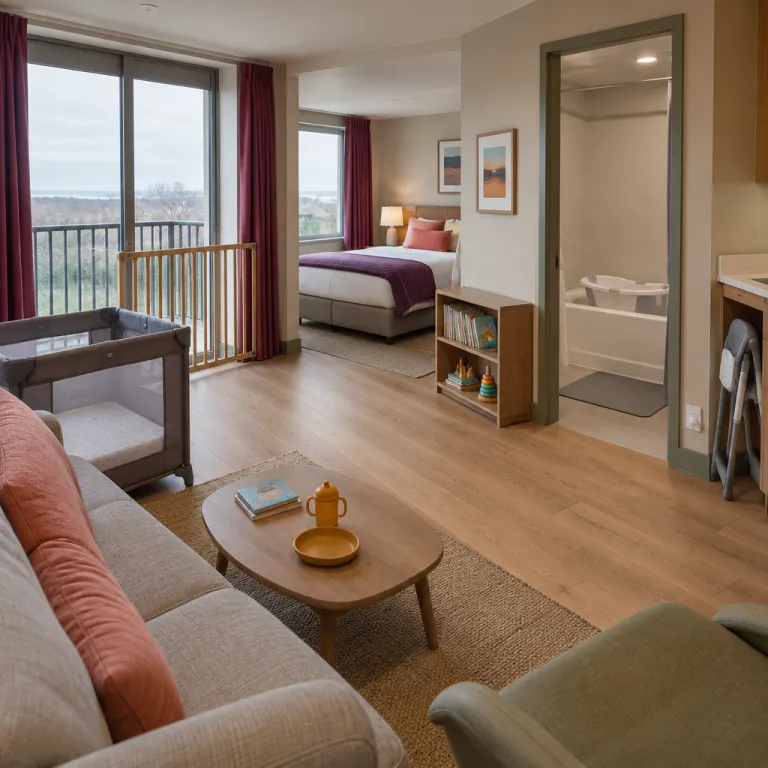
Luxury family hotel – what to look for before you book
Reading a luxury family hotel like a parent starts long before you arrive. When you compare hotels and resorts online, the phrase “family friendly” appears everywhere yet often means very little in practice. The real work is decoding which family hotels are designed around families and which hotels simply tolerate kids in exchange for a higher room rate.
Begin with space, because the best family stays are built on it. Look for clearly described rooms and suites, with floor plans that show whether a second bedroom, bunk beds or connecting rooms actually give privacy instead of just extra beds squeezed into one room. As a benchmark, many luxury family suites start around 40–50 square metres for two adults and two children, while larger two bedroom suites can run to 70–90 square metres. A genuine luxury family property will detail bedroom suites, room suites and family rooms with square metres, bed types and maximum guests, not just a vague promise of a larger room.
Next, examine how the hotel talks about children in the booking journey. On a serious luxury and premium booking website, you should be able to book a family room or several rooms for families in one flow, choose the ages of kids and see transparent pricing for extra beds or cots. Many high end hotels now show typical nightly supplements for rollaway beds or sofa beds, often in the range of 30–80 in local currency per child, and clearly state whether cots are complimentary. If the booking engine hides these options or forces you to call, that is rarely a good sign for a smooth stay with children.
Location matters more for families than for almost any other traveller. A polished hotel in New York with a glamorous restaurant and rooftop pool can still fail families if the nearest park is 30 minutes away and every museum requires two metro changes with a stroller. As a rule of thumb, aim for a maximum 10–15 minute walk to a major park or playground and a single public transport ride to key attractions. For younger kids, prioritise places to stay within a short walk of a safe park, a playground or the beach, while older children may value quick access to cultural districts or sports facilities.
Finally, read full descriptions of services with a parent’s eye, not a design lover’s gaze. A hotel spa, an open air bar and a fine dining restaurant are wonderful, but they only serve a luxury family break if they coexist with early dinner options, children’s menus and relaxed spaces where kids can be themselves. Look for specific timings, such as restaurants opening from 17.30–18.00 for families, and sample children’s dishes listed alongside adult menus. When you understand how each facility works for both adults and children, you start to see which friendly hotels genuinely earn a family premium.
The tells of a genuinely family friendly design
The most reliable signal of a truly family friendly hotel is how it handles sleep. Look for bedroom suites with doors that close, not just a curtain between the parents’ bed and a sofa bed, because real rest is the foundation of the best family trips. When a hotel offers bunk beds, trundle beds and flexible room suites with blackout curtains, sound insulation rated to at least 30–35 dB and proper reading lights, it is signalling that families are not an afterthought.
Bathrooms reveal almost as much as beds. Properties that work for families will mention step stools, baby baths, non slip floors and space to line up several toothbrushes, while many hotels simply photograph a sculptural tub that is impossible to use with toddlers. Practical details might include walk in showers with handheld heads, shelves at child height and heated towel rails with safety cut offs. If you are travelling with a multi generational group, ask whether accessible rooms connect to standard rooms so grandparents can stay close without sacrificing comfort or privacy.
Dining is where the gap between marketing and reality often appears. A restaurant that welcomes kids at 18.30, offers half portions of good dishes and provides high chairs without a fuss is far more valuable than a Michelin star that only serves dinner after 20.30. When you evaluate hotels’ family options, check whether room service offers children’s favourites, whether breakfast starts early enough for jet lagged kids and whether the bar has a quiet corner where parents can share a drink while children read or draw.
Shared spaces should feel relaxed rather than tense. In a well run luxury family property, you will see staff greeting kids by name, offering colouring pencils at check in and speaking directly to young guests instead of only to parents. Many family focused hotels also provide small play corners in the lobby, shelves of picture books and board games, and a casual seating area near the pool. If every lounge looks like a gallery and there is no sign of toys, books or a casual corner near the pool, you may find yourself whispering “sorry” all weekend.
Price is another lens for reading intent, and parents should understand the real cost of a luxury hotel night before committing. When a property charges a full adult supplement for a child in the same room yet offers no meaningful family programming, that premium is hard to justify. By contrast, hotels that include supervised kids’ activities, early dinners and family concierge support within the nightly rate often represent better value. For a deeper breakdown of what you are paying for, including how family services are priced, consult a detailed analysis of the real cost of a luxury hotel night on a trusted travel review platform, which helps you judge whether a supposed luxury family stay is priced fairly.
Kids clubs, pools and programmes that respect children
Many hotels promote a kids club, yet very few run one that genuinely enhances a family stay. The weakest versions are windowless rooms with a television, a few plastic toys and staff who are really there for basic babysitting rather than meaningful engagement. A strong kids club, by contrast, feels like a small school and playground combined, with a clear schedule, creative activities and a team trained to work with different ages.
When you assess a kids club online, look for specifics rather than slogans. The best family programmes list age brackets, staff to child ratios, safety procedures and sample daily activities, while weaker offers simply promise “fun for all ages” without detail. Typical high quality ratios range from 1:3 for babies to 1:6 for school age children, with opening hours often from 09.00–12.00 and 14.00–18.00. Ask whether the club is included in the room rate, whether babies are accepted and whether teenagers have their own zone, because a 14 year old rarely wants to share crafts with a four year old.
The pool is often the emotional centre of a luxury family holiday. Parents should check whether there is a shallow area for small kids, lifeguards on duty and clear rules that balance safety with play, because a silent adults only pool will not suit most families. Many family resorts now publish pool depths, typical water temperatures and lifeguard hours, such as 10.00–18.00 daily. Some hotels and resorts now design separate family pools with slides, shaded loungers and nearby snacks, leaving another pool calm for adults who prefer to swim laps or read.
Outdoor space is another major differentiator. Properties with open air lawns, a small park style garden or direct beach access give kids room to run without constant shushing, which changes the entire mood of a stay. As a practical guide, look for at least a small enclosed garden or terrace of 100–200 square metres where children can play safely. When you compare vacation ideas, prioritise places to stay where you can step from your room to a safe outdoor area in under two minutes, especially with toddlers who wake early and need movement.
Parents who refuse to compromise on either style or substance should seek out hotels that are explicitly built around families rather than retrofitted for them. For inspiration, many curated collections now highlight midsummer luxury with children at properties built for families who refuse to compromise, showing how thoughtful design, serious programming and a strong hotel spa can coexist. Those examples set a benchmark for what a modern luxury family hotel can and should deliver.
Balancing adult time, multi generational needs and the family premium
The hardest part of a luxury family stay is often not the kids, but the balance between adult time and togetherness. A property that truly understands families will design the day so parents can enjoy the hotel spa, the bar or a quiet restaurant table while children are happily occupied, not merely parked in front of a screen. This is where a thoughtful kids club, in room babysitting and flexible meal times work together rather than as isolated services.
Multi generational trips add another layer of logistics. Grandparents may want quieter rooms, earlier dinners and easier access to the lift, while parents might prioritise proximity to the pool and kids’ facilities, so the best family hotels offer a mix of room types on the same corridor. When you book, ask whether the hotel can cluster several rooms or bedroom suites around a shared living area, which allows everyone to gather for a drink before dinner yet retreat easily when children need bed.
Location again plays a crucial role for three generation stays. A central hotel in New York near a major park can allow grandparents to take a gentle stroll with the kids while parents visit a gallery or enjoy a long lunch, which is far more civilised than relying on taxis for every outing. In resort settings, look for hotels and resorts where the main restaurant, pool and kids’ areas are on the same level, because stairs and long walks quickly exhaust older guests.
Parents should also think carefully about when a full service resort truly earns its family premium. If the only child focused features are a shallow corner of the pool and a token colouring sheet at the restaurant, you may be paying for facilities you will barely use. By contrast, when a property offers serious programming, flexible room suites, attentive staff and a location that works for all ages, the higher rate can represent good value over a cheaper but stressful alternative.
For families weighing whether to travel far or stay closer to home, price gaps between domestic and international luxury stays can be significant. Comparative reviews of luxury hotels abroad versus at home for families show how taxes, staffing and seasonality affect what you receive for the same budget, which is crucial when you are booking several rooms. Understanding these dynamics helps you decide whether to allocate your next big trip to a long haul resort or a shorter weekend getaway that still feels special.
Practical questions that separate substance from brochure copy
Parents who have stayed in many luxury family properties tend to ask the same precise questions before they book. These questions cut through brochure language and reveal whether a hotel is genuinely family friendly or simply using the label to fill rooms in school holidays. Use them as a checklist when you speak to reservations or message the property directly.
Start with sleep and space. Ask whether the advertised family rooms are a single room with a sofa bed or true bedroom suites with a door, and whether bunk beds are full size or only suitable for small kids. Clarify how many guests are allowed in each room, whether cots are guaranteed and whether connecting rooms can be confirmed at booking rather than “requested on arrival”, because that phrase often leads to late night negotiations at the front desk.
Move to food and daily rhythm. Ask what time the restaurant starts serving dinner, whether there is a children’s menu with real food rather than only fries and nuggets, and whether room service can bring breakfast early for jet lagged families. Check if the hotel can warm baby food, accommodate allergies and provide flexible seating so you are not placed in a corner that feels like exile from other guests.
Then address activities, safety and staff attitude. Ask whether the kids club is staffed by trained childcare professionals, whether the pool has lifeguards and whether there is a nearby park or beach that is safe to reach on foot with children, because these details shape your daily routine. A hotel that answers quickly, clearly and warmly is usually a better bet than one that sends generic links and avoids specifics.
Finally, consider how the property fits into your broader vacation ideas and budget. Some families prefer intimate hotel family options in the countryside, such as Woolley Grange, Fowey Hall or Park Manor, where a kids club, gardens and a relaxed restaurant create a village like feel, while others lean towards urban weekend getaways in New York or similar cities with culture on the doorstep. Whatever your style, the goal is the same: to choose a luxury family stay where design, service and location work together so that both adults and children feel like the hotel was built with them in mind.
FAQ
How can I tell if a hotel is genuinely family friendly before I arrive ?
Look for detailed information about family rooms, kids’ facilities and dining times rather than vague promises. A genuinely family friendly hotel will specify room layouts, age ranges for the kids club, pool safety measures and children’s menus, and will answer direct questions quickly and clearly. If the website and staff avoid specifics or treat children as an add on, the experience is unlikely to match the marketing.
What room types work best for families with young children ?
For babies and toddlers, one large room with space for a cot can work if adults are comfortable keeping lights low after bedtime. For longer stays, bedroom suites or connecting rooms give parents a separate space to relax once kids are asleep, which often makes the entire trip feel more restful. Bunk beds or sofa beds are useful for older children, but always check weight limits, guard rails and whether the beds are full size.
Are kids clubs worth paying extra for in luxury hotels ?
A well run kids club can transform a family holiday by giving children engaging activities and parents a few hours of genuine downtime. It is worth paying extra when the club offers structured programmes, trained staff, safe facilities and age appropriate groups rather than just a television and toys. If the club is vague about schedules or supervision, you may be better off planning your own family activities.
How should multi generational families choose rooms and locations ?
Multi generational groups usually benefit from a cluster of rooms or suites around a shared living area, so everyone can gather easily yet still retreat to private spaces. Choose a location close to level walking routes, a park or the pool so grandparents are not exhausted by stairs or long corridors. When booking, ask the hotel to place rooms on the same floor near a lift and to confirm this in writing.
When does a luxury family resort justify its higher price ?
The higher price is justified when the resort offers meaningful family facilities, such as serious kids’ programming, flexible dining, spacious rooms and attentive staff who genuinely welcome children. If you find yourself paying a premium for design features you cannot use with kids, such as late night restaurants or adults only pools, the value is questionable. Compare what is included in the rate with how your family actually spends time to judge whether the premium makes sense.