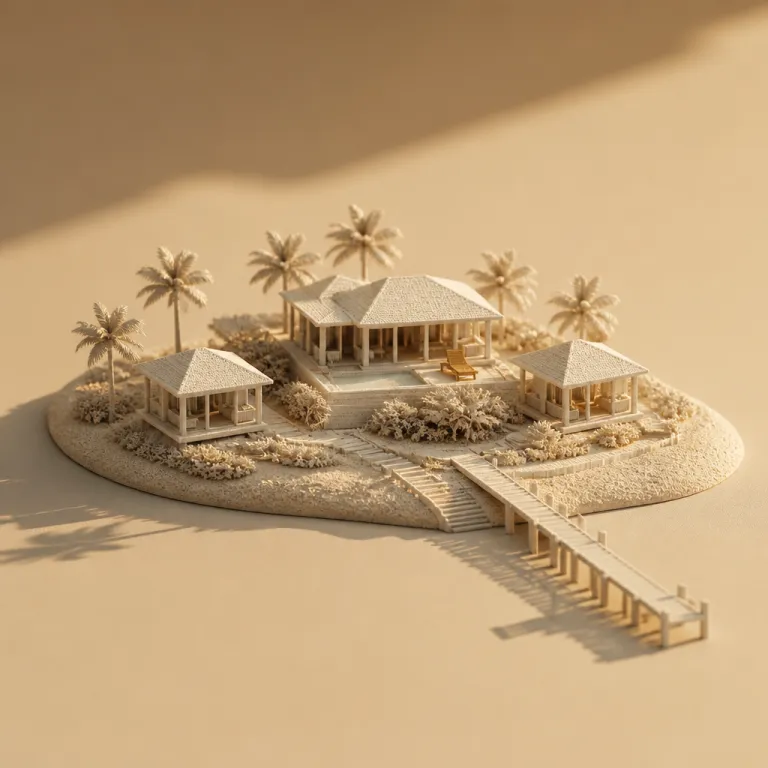
Private island resorts for solo travelers: how micro resorts redefine luxury
Why single digit room counts change the private island equation
On a true private island, the guest list matters more than the star rating. When a resort limits capacity to a handful of villas or bungalows, the entire private island luxury resort experience shifts from spectacle to something closer to a house party with exceptionally polished service. For solo travelers used to large island resorts and big luxury hotels, that intimacy can feel either thrillingly liberating or uncomfortably exposed.
Royal Davui Island Resort in Fiji hosts a maximum of around 32 guests across 16 thatched villas, and that scale defines every aspect of the island resort rhythm from the beach to the bar and dining spaces. Typical nightly rates for solo travelers start around US$1,200–US$1,800 in high season, reflecting the cost of boat or helicopter transfers from Pacific Harbour (about 30–60 minutes), a high staff‑to‑guest ratio, and the maintenance of the island’s natural beauty, yet semi‑inclusive or fully inclusive structures often soften the final bill. When you compare those rates with larger top resorts once you factor in à la carte dining, paid activities, and daily transport, the smallest island hotels can represent some of the best luxury value in high‑end travel.
COMO Cocoa Island in the Maldives, with 33 overwater villas and suites, shows how a slightly larger island hotel can still feel intensely private. The resort uses its limited villa count to curate experiences around the lagoon and reef, rather than around a long list of generic activities that could be anywhere. For solo luxury travel, that means staff quickly learn whether you want a quiet beach, a guided snorkel, or a table for one at the most atmospheric corner of the restaurant and bar each evening, while a 40‑minute speedboat transfer from Malé keeps logistics simple.
What you really pay for on a micro resort island
Rates on a private island often look eye‑watering until you unpack what is folded into the stay. When the island is the resort, the line between room rate and experience budget blurs, because transfers, guided snorkeling, non‑motorized water sports, and daily wellness rituals are usually bundled into one figure. For a solo traveler comparing the best luxury options across islands, the question is not just price per night, but how much of your travel spend is already handled before you even land.
At Royal Davui Island Resort, the 16 villas translate into a team that knows your preferences by the second day, and that level of personalization is part of the invisible luxury you are paying for. The same logic applies at Toberua Island Resort in Fiji, where 16 oceanfront bures turn the whole island into a relaxed village rather than a formal resort, and where the private island luxury resort experience includes small‑group sailing, reef visits, and long beach lunches without constant signing of bills. This is the quiet counterpart to the backstage precision described in the world of what the world’s best hotels do before you check in, only here the stage is an entire island rather than a city hotel lobby.
All‑inclusive or full‑board plans on a private islands portfolio can mean very different things, so read carefully. Some island resorts such as COMO Cocoa Island or COMO Laucala Island in Fiji focus on wellness, including daily yoga, guided snorkeling, and plant‑forward menus at their restaurant and bar venues, while others lean into champagne‑heavy beach picnics and motorized excursions. For solo luxury travel, the best value equation is usually a resort where the inclusions match your real habits, not the brochure fantasy you will never actually use.
From isolation to community: how tiny islands feel when you travel solo
Being one of roughly 30 guests on an island sounds like the ultimate privacy, yet for a solo traveler it raises a practical question. Will a micro resort feel like a curated community of like‑minded guests, or like a gilded cage where everyone notices when you skip dinner? The answer depends less on the number of villas and more on how the resort choreographs shared spaces, from the beach to the bar.
On islands such as Cayo Espanto in Belize or Mnemba Island off Zanzibar, the private island luxury resort experience is built around seclusion first, with villas and overwater pavilions spaced so that you rarely see other guests unless you choose to. By contrast, Mnemba Island and Bawah Reserve in Indonesia use communal tables, small‑group snorkeling, and daily sunset rituals to encourage gentle interaction, which can be ideal for solo luxury travel that still wants conversation. For travelers who prefer a more structured social rhythm, curated journeys and luxury hotel packages similar in spirit to the elevated travel experiences in Europe can be a useful benchmark when choosing between island resorts.
On the ground, the smallest island hotel teams quickly learn who wants privacy and who is happy to share a boat, a dive, or a long lunch. At COMO properties such as COMO Laucala Island, staff often pair solo guests with compatible fellow travelers for excursions, while still keeping villas and beaches resolutely private. On Laucala Island or at Six Senses Laamu in the Maldives, the best luxury stays for solo travelers tend to be those where the resort acknowledges that some days you want to be alone with the ocean, and other days you want to join a group kayak or a tasting flight at the restaurant and bar, with staff adjusting the balance between solitude and community rather than treating every guest the same way.
Connectivity, wellness, and the new definition of island luxury
Not every private island luxury resort experience is built for the same kind of escape. Some islands lean into digital detox, with patchy Wi‑Fi and a deliberate focus on the natural beauty of reefs, jungle, and beach, while others quietly install serious connectivity for guests who arrive with laptops as well as linen shirts. For solo travelers who mix work and luxury travel, that difference can make or break a stay.
The Aerial BVI in the British Virgin Islands is a useful reference point, designed for a small number of guests and built around deep wellness programming rather than traditional resort spectacle. Gladden Private Island in Belize, positioned near the second‑largest barrier reef, shows another model where the island resort is effectively a single villa with staff, turning the entire island into one immense private suite. Little Palm Island Resort & Spa in the Florida Keys, often cited as one of America’s most exclusive private island retreats and featured in the Michelin Guide’s hotel selection, proves that culinary ambition and serious spa design can coexist at small scale, much like the bathroom‑centric sanctuaries explored in this analysis of spa‑grade design in luxury hotels.
Elsewhere, properties such as Six Senses Laamu, Six Senses Zil Pasyon in the Seychelles, and the related Six Senses Zil Pasyon Residences concept illustrate how sustainability and wellness now define the best luxury benchmarks on islands. On Zil Pasyon, the island resort layout keeps villas carved into granite and jungle, preserving natural beauty while still offering strong connectivity for guests who need to work between dives. For solo travelers, the sweet spot often lies in resorts that offer reliable Wi‑Fi in villas and island hotels, but encourage you to leave the phone behind when you walk down to the beach or into the restaurant and bar each evening, with image‑rich design and thoughtful lighting making screens feel unnecessary.
How to choose the right private island for your style of luxury travel
Choosing between Bawah Reserve, Cayo Espanto, Mnemba Island, or a French Polynesia legend such as The Brando is less about which is objectively the best, and more about which island’s rhythm matches your own. The Brando in French Polynesia, for example, offers a polished, cinematic version of the private island luxury resort experience, with multiple dining venues, a serious spa, and villas that feel like small houses. By contrast, Bawah Reserve in Indonesia leans into castaway aesthetics, with timber villas, dense jungle, and a focus on marine conservation that shapes daily activities.
For some solo travelers, the ideal island resort is one where you can share a boat with other guests in the morning, then retreat to a private pool and a quiet beach cabana by afternoon. Others will prefer the near‑total seclusion of Cayo Espanto, where each villa feels like its own micro resort and staff orchestrate everything from sunrise coffee to late‑night snacks without you ever seeing a menu. Island resorts such as COMO Laucala Island and Six Senses Laamu sit somewhere in between, offering both structured experiences and the freedom to vanish into your own corner of the island hotel landscape.
Across these islands, the through line is a shift from impressive scale to intimate detail in the way luxury hotels think about service. Whether you are on a single‑villa island in Belize or a low‑key cluster of bures at Toberua Island Resort, the best luxury stays are those where staff anticipate your needs without choreography feeling intrusive. For solo travelers, that is the real measure of a private island luxury resort experience, not how few villas the resort has, but how precisely it turns one island into your temporary private world.
FAQ
How far in advance should I book a small private island resort ?
For micro resorts with fewer than 20 villas, booking six to twelve months ahead is often necessary, especially for peak dry seasons. Properties such as Royal Davui Island Resort, COMO Cocoa Island, and Toberua Island Resort operate year‑round but see intense demand around regional holidays. If your dates are fixed, treat these island hotels more like a coveted restaurant reservation than a last‑minute beach break.
Are private island resorts good value for solo travelers ?
Value depends on how much you use what is included in the rate. When transfers, most activities, and daily dining at the restaurant and bar are bundled, a private island luxury resort experience can compare favorably with paying à la carte at larger luxury hotels. Solo travelers who enjoy guided excursions, wellness sessions, and chef‑led dinners usually extract more value than those who simply want a room and a beach.
What is the capacity of Royal Davui Island Resort ?
Royal Davui Island Resort typically accommodates up to about 32 guests in 16 bungalows. This compact scale is central to the resort’s appeal for travelers seeking privacy and personalized service on a Fijian island. For solo guests, it means staff quickly recognize you, yet the guest count is high enough to avoid feeling over‑observed.
How many villas does COMO Cocoa Island have ?
COMO Cocoa Island offers 33 overwater villas and suites. That number allows the resort to maintain an intimate atmosphere while still providing a full spa, serious cuisine, and a range of lagoon‑based activities that suit both couples and solo travelers.
What type of accommodations does Toberua Island Resort offer ?
Toberua Island Resort features 16 oceanfront bures. These traditional‑style structures keep guests close to the water and help preserve the island’s natural beauty, creating a relaxed, village‑like feel that many solo travelers find more welcoming than a large, formal resort.