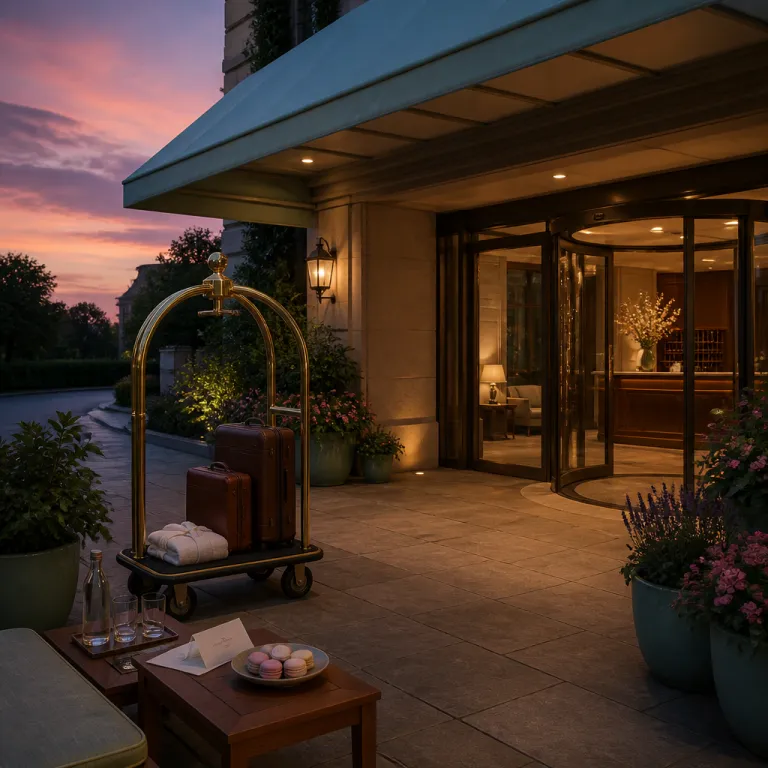
The first 90 seconds: where the hotel arrival experience really begins
Walk into a true luxury hotel and the clock starts immediately. In roughly ninety seconds, the hotel arrival experience shapes your first impression and quietly decides whether this stay will feel effortless or slightly off key. For many guests, that first walk from the door to the front desk defines the entire guest journey more than any later room upgrade ever could.
Hospitality research shows that a large percentage of guests are influenced by their first impressions, and that a strong arrival experience can significantly increase repeat business. In a Cornell Center for Hospitality Research study titled “Service Failure and Recovery in Hospitality and Tourism” (Pullman & Robson, 2007), early service encounters were found to be strong predictors of overall satisfaction and intent to return, with guests who rated check in as “excellent” reporting overall satisfaction scores more than 15 percent higher than those who rated it as “average.” When you are the hotel guest stepping inside after a long travel day, you feel this in real time, even if you never put words to it.
The anatomy of those first moments is surprisingly precise. From the way staff make eye contact before you even reach the front desk, to whether someone quietly offers to check if an early check in is possible, every gesture signals how the property thinks about customer experience. In the best luxury hotels, the arrival experience is choreographed so guests feel recognised as individuals, not processed as reservations.
For solo travelers, that choreography matters even more. You may have crossed continents alone, and the first person who uses your name with ease can reset your whole mood. When the hotel arrival feels calm, intuitive and human, the guest experience gains a foundation that no later amenity can fully repair if it was missing at the start.
Pre arrival intelligence and invisible hospitality technology
Long before you roll your suitcase across the threshold, the smartest luxury hotel teams are already working on your arrival experience. They treat pre arrival as a quiet but critical phase, using guest preferences from loyalty profiles, past stays and reservation notes to customize the stay in ways you will only sense subconsciously. This is where hospitality technology, when used with restraint, turns data into something that simply makes guests feel understood.
At brands like Aman, the absence of a formal front desk is not an aesthetic choice but a deliberate rethinking of the check in ritual. Their paperless arrival experience means the guest journey moves directly from car to room, with registration handled discreetly on a tablet or even completed during pre arrival communication. Four Seasons, by contrast, often leans into an escort to the room, where the check in is finished at a writing desk, creating a different emotional signature that still prioritises the first impression over administrative routine.
Across these properties, hospitality technology works best when it disappears. Mobile keys, real time messaging and pre arrival forms reduce friction, but the guest experience still hinges on how staff interpret the information, not on the software itself. Industry surveys such as the J.D. Power North America Hotel Guest Satisfaction Index consistently show that digital tools improve satisfaction only when they support, rather than replace, attentive human service.
When hotels use these tools well, guests expect a seamless transition from outside chaos to inside calm, without ever seeing the machinery behind it. The arrival experience then feels like a natural extension of your own habits and lifestyle, rather than a scripted hospitality performance. That is when a luxury hotel quietly earns your loyalty before you have even seen the room.
Calibrating the welcome: from silence to champagne
Not every luxury property should greet you with a flute of champagne and a chorus of names. The most sophisticated hotels calibrate the arrival experience to their identity, deciding whether guests will feel more at home with a cool scented towel, a hushed lobby or a lively bar humming just inside the entrance. What matters is that the first contact between guest and staff feels intentional, not generic.
In an urban luxury hotel with a strong local following, the lobby often acts as a shapeshifting community hub where hotel guests and residents share the same space. Here, the arrival experience might prioritise speed at the front desk, with the option to complete a digital check in and head straight to the room, while the energy of the bar or café signals that this property is plugged into the city. A coastal resort, such as the high end hotels featured in this guide to luxury views and world class amenities in San Diego, may instead slow the pace, offering a seat, a drink and a view before any paperwork appears.
Silence can be just as powerful as ceremony. Some guests arrive after long haul travel and want nothing more than a swift escort to the room, with the option to handle formalities or extended conversations later. Others appreciate a brief tour of the property, where staff point out wellness areas, restaurants and quiet corners, allowing the guest journey to begin with orientation rather than disorientation.
For families, the best hotels anticipate that children’s first impressions will shape the mood of the entire stay. A small welcome amenity in the room, a staff member who kneels to greet a child at eye level and a clear explanation of kid friendly spaces can transform parental stress into relief. Couples, by contrast, often value privacy and a sense that the hotel arrival has already filtered out noise, so the property feels like a retreat from the city outside.
Sensory design: how lobbies reset the nervous system
Step from a crowded street into a well designed lobby and you feel your shoulders drop almost instantly. That shift is not accidental; it is the result of careful choices about scent, sound, light and spatial flow that shape the arrival experience before a single word of service is spoken. In luxury hotels that understand this, the lobby acts as a decompression chamber between the public world and the private room.
Sound is often the first cue your body registers. A property that wants guests to share the space with locals may lean into a low conversational buzz, while a retreat style luxury hotel will keep music restrained and let softer acoustics carry the mood. When staff speak at measured volumes and the front desk is positioned to avoid echoing queues, the guest experience feels calm even during peak arrival times.
Scent is another quiet signature. Many hotels now use bespoke fragrances that guests expect to recognise on every stay, creating a sensory first impression that becomes part of the brand’s memory architecture. When you walk inside and inhale something familiar, the guest journey reconnects with previous visits, and the room upgrade becomes secondary to the emotional continuity.
Spatial design completes the picture. Clear sightlines from the entrance to at least one comfortable seating area signal that guests can pause before they check in, while discreet pathways to elevators prevent the awkward feeling of dragging luggage through a restaurant. For travelers who value wellness, a lobby that subtly points toward spa or fitness areas can extend this sense of care, and resources such as this guide to what a world class hotel wellness program actually looks like show how the best properties integrate arrival rituals into broader wellbeing strategies.
From real time recognition to post stay memory
The most impressive arrival rituals do not end when the key card touches the reader. In a mature luxury hotel, the first impression is reinforced through real time recognition during the stay and thoughtful post stay follow up that respects the guest’s attention. This is where hospitality technology, used with restraint, allows staff to customise the stay without ever making the guest feel surveilled.
When a hotel uses a guest preferences database intelligently, the front desk and concierge can coordinate with housekeeping and food and beverage teams to anticipate what guests expect before they ask. A preferred pillow type, a quiet room location or a specific non alcoholic drink can appear without fanfare, making the guest experience feel almost eerily aligned with personal habits. For the solo traveler, this kind of low key precision often matters more than a late night room service menu or a last minute room upgrade.
During the stay, real time messaging tools allow guests to check details, adjust plans or share feedback without standing in line, which keeps the arrival experience’s sense of ease alive throughout the visit. After departure, a concise post stay note that references the specific trip, rather than a generic survey blast, can close the guest journey on a high point and encourage honest reviews. In a 2019 TrustYou analysis of more than a million online reviews titled “The Impact of Guest Reviews on Hotel Performance,” properties where guests explicitly praised check in and welcome procedures recorded average review scores roughly 7 percent higher than comparable hotels without those comments.
For travelers choosing between several luxury hotels on a premium booking platform, paying attention to how properties talk about their arrival rituals can be more revealing than comparing square metres or thread counts. A hotel that trains staff to prioritise the first ninety seconds, invests in subtle technology and treats every arrival as a chance to reset the nervous system is far more likely to deliver a stay that lingers in memory. In the end, the room is where you sleep, but the arrival is where you decide whether you will ever return.
FAQ
Why does the arrival ritual matter more than a room upgrade?
The arrival ritual shapes your emotional baseline for the entire stay, while a room upgrade mainly affects space and amenities. Research from hotel management studies indicates that a majority of guests are influenced by their first impression, which then colours every later interaction. If the arrival experience feels calm, personal and efficient, even a standard room can feel luxurious.
How can I tell if a hotel takes the arrival experience seriously?
Look for signs that the property talks about pre arrival communication, personalised welcomes and flexible check in options rather than only promoting room categories. Reviews that mention staff using names, smooth early check in handling and thoughtful lobby design are strong indicators. When guests feel recognised within the first minutes, they tend to share that detail in their feedback.
What can I do as a guest to improve my own arrival?
You can help the hotel customise the stay by sharing key preferences in advance, such as arrival time, pillow type or dietary needs. Arriving slightly outside peak check in hours often leads to a calmer front desk experience and more attentive service. Joining a loyalty program also allows the property to build a clearer picture of your guest journey over multiple stays.
Do technology driven arrivals feel less personal?
They only feel less personal when hotels use hospitality technology as a shield rather than a tool. Mobile keys, digital registration and real time messaging can actually free staff from administrative tasks, giving them more time for genuine conversation. The most successful luxury hotels blend seamless systems with warm human contact at the door and in the lobby.
Does a great arrival really affect reviews and repeat stays?
Industry data shows that a strong arrival experience can significantly increase repeat business for hotels. Guests often mention their first impressions in reviews, especially when the welcome felt either exceptionally smooth or noticeably clumsy. Over time, that pattern directly shapes a property’s reputation and the loyalty it earns from frequent travelers.