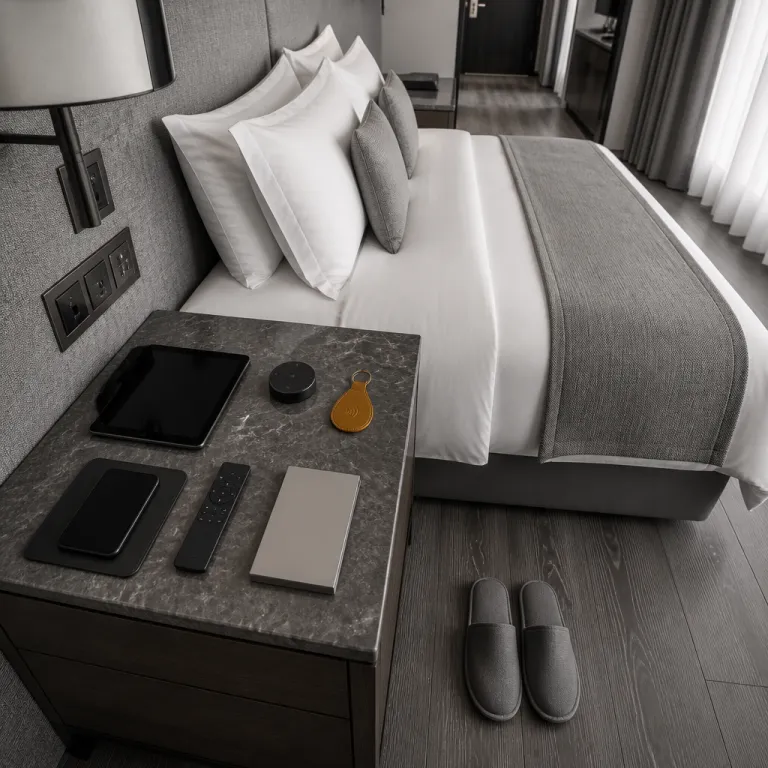
The quiet revolution of smart room luxury hotel technology 2026
Smart room luxury hotel technology 2026 is reshaping how high end travelers judge a stay. In the top tier of the hospitality industry, the best hotels now treat technology as an invisible layer that quietly anticipates needs rather than a gadget showroom that overwhelms guests. The result is a new standard where a hotel room feels intuitively yours within minutes, yet you never feel managed by machines.
Across the global hotel industry, executives talk less about shiny tech and more about guest experience outcomes. They want systems that raise guest satisfaction scores, streamline hotel operations, and support revenue management without eroding the human warmth that defines true luxury. In this context, hospitality technology is no longer a side project ; it is the nervous system of every serious luxury hotel and of the most ambitious hotels aiming to move upmarket.
Recent technology trends show a clear pattern in how guests actually behave. Luxury travelers use smart features that are obvious, easy, and clearly linked to comfort, while ignoring anything that feels like homework. That adoption gap is exactly why 56 % of properties in a Hotels.com survey reported feeling pressure to upgrade tech, yet many guests still require verbal tech walkthroughs at the front desk during check in.
For business leisure travelers extending a trip, the stakes are higher. They expect hotel technology to support work, rest, and play in the same room, from reliable bandwidth for video calls to lighting scenes that shift from boardroom focus to late night unwinding. When smart rooms fail to deliver on these basics, no amount of artificial intelligence in the background will compensate.
Behind the scenes, management systems now ingest real time données from multiple touchpoints to refine service. A luxury hotel can track which smart rooms see the highest minibar usage, which hotel room layouts drive better guest satisfaction, and which technology solutions correlate with higher ancillary revenue. The smartest hotel tech quietly turns this data into better hospitality, not more notifications.
The adoption gap: what guests actually use versus what hotels install
Walk into a flagship luxury hotel in Las Vegas or in Singapore and you will often find a dazzling array of tech. Yet when you talk to guests afterwards, the features they remember are usually simple : lighting that flatters, blackout blinds that actually block light, and a thermostat that holds the right temperature all night. Smart room luxury hotel technology 2026 only succeeds when these fundamentals work flawlessly before any advanced feature even enters the conversation.
The Hotels.com survey of luxury travelers, interpreted with AI driven analysis, underlines this point. When asked about preferred smart features, respondents focused on customizable lighting, smart TVs, and smart fans rather than complex in room tablets or experimental gadgets. That gap between what the hospitality industry installs and what guests use is where both wasted capital expenditure and missed guest experience opportunities live.
For travelers browsing a premium booking website, this adoption gap should shape how you read hotel technology claims. Look for specific mentions of smart rooms that emphasize ease of use, such as physical switches alongside app control, rather than vague promises about cutting edge systems. When a hotel describes its tech in plain language, it usually reflects management that has tested features with real guests instead of just following industry trends.
There is also a geographic nuance that seasoned travelers notice. In tech forward cities like Las Vegas, hotels often push more aggressive digital transformation, from mobile check in to fully keyless entry, while heritage properties in Europe may adopt a slower, more selective approach. Both models can work, but only if the hotel operations team trains staff to translate technology into human language at the front desk and in the room.
For example, some of the best hotels in Albuquerque quietly prioritize bandwidth and intuitive controls over theatrical gadgets, a strategy that pays off for business leisure guests who value reliability. When you read a guide to refined stays and the best hotels in Albuquerque, the properties that stand out tend to be those where tech supports sleep, work, and wellness without demanding attention. That is smart room luxury hotel technology 2026 at its most effective : understated, stable, and tuned to real behavior.
From a revenue perspective, this adoption gap matters more than many executives admit. Hotel tech that guests ignore cannot support revenue management models based on personalization or upsell prompts, because the underlying systems never gather meaningful data. The hotels that win are those that treat every smart feature as a tool to deepen guest experience first and to optimize revenue second.
Control on your terms: voice, apps, or no tech at all
Control is where smart room luxury hotel technology 2026 becomes personal. Some guests want to run every aspect of their hotel room from a phone, others prefer voice commands, and a significant minority still trust only a physical switch. The most sophisticated luxury hotel systems now accept all three preferences without forcing a choice.
In practice, that means layered hospitality technology rather than a single interface. A guest can use mobile check in to bypass the front desk, then still find a traditional keycard waiting with a smile if they decide to stop by. Inside the room, an app might offer granular control of lighting scenes and temperature, while discreet wall panels and a bedside master switch ensure that less tech inclined guests never feel trapped by software.
Voice control is the most polarizing of the current technology trends. Some guests love asking a smart speaker to close the curtains, adjust the room to 20 °C, or queue up a playlist, while others worry about privacy or simply dislike talking to devices. Smart rooms that respect both camps allow voice to be fully disabled in settings, with clear information about what data is or is not stored and how long it remains in the hotel systems.
Luxury travelers also expect continuity across brands and cities. A frequent flyer who has mastered app based controls in a luxury hotel in Tokyo does not want to relearn an entirely different interface in Barcelona the following week. Guides to where to stay for the best hotels Barcelona has to offer increasingly highlight properties whose hotel tech feels familiar, intuitive, and consistent across rooms.
For business leisure guests, this flexibility directly shapes guest satisfaction. After a day of meetings, no one wants to troubleshoot a tablet just to dim the lights or adjust the air conditioning in their hotel room. Smart room luxury hotel technology 2026 that offers app control, voice options, and simple manual overrides gives each guest the freedom to choose their comfort path without friction.
From the hotel management side, this multi channel control strategy demands robust management systems. Staff must be able to see, in real time, whether a feature is controlled via app, voice, or hardware, and intervene quickly if something fails. When hotel operations teams have this visibility, they can maintain the illusion of effortlessness that defines true luxury service.
Biometrics, privacy, and the new front door of luxury hospitality
Biometric check in is one of the most visible faces of smart room luxury hotel technology 2026. Facial recognition at the entrance or lobby kiosk promises a frictionless arrival, especially for frequent guests who are tired of presenting passports and credit cards at every front desk. Yet in the luxury segment, convenience must be balanced with a deep respect for privacy and control.
Leading hospitality technology providers now design biometric systems with explicit consent at every step. Guests can opt in to facial recognition for faster access to their hotel room, while still retaining the option of traditional mobile check in or a staffed desk. Clear explanations about how biometric data is encrypted, where it is stored, and when it is deleted are no longer optional ; they are part of the service script.
Luxury hotels also use biometrics differently from mass market chains. In the high end hospitality industry, facial recognition is less about replacing staff and more about enabling them to offer more personal service. A guest who has opted in might be greeted by name on arrival, with their preferred drink already in motion, while the system quietly confirms identity in the background.
For travelers, the key question is always what happens to their données. Smart room luxury hotel technology 2026 relies on data to pre set temperature, lighting, and even scent, but that does not mean guests want their profiles shared across unrelated hotels. The most trusted brands publish clear data governance policies and allow guests to edit or delete their preferences with a few taps.
There is also a cultural dimension that seasoned travelers should consider. In some regions, guests are more comfortable with biometric systems, while in others, facial recognition still feels intrusive or politically sensitive. A luxury hotel that understands its market will often offer biometrics as an optional layer rather than a mandatory gateway, preserving the human ritual of check in for those who value it.
For those who care about design as much as tech, biometrics are also reshaping public spaces. Properties that treat the lobby as a living room, as explored in this analysis of how hotel public spaces are being redesigned, often hide security and access systems behind warm materials and residential layouts. The goal is a seamless flow where guests feel welcomed into a home, not processed through an airport style checkpoint.
Entertainment, bandwidth, and the invisible infrastructure of comfort
For many travelers, the most tangible part of smart room luxury hotel technology 2026 is entertainment. The days of pay per view movies and clunky channel guides are fading, replaced by streaming ready smart TVs, integrated sound systems, and casting solutions that mirror your own devices. Yet none of this matters if the hotel cannot deliver fast, stable internet to every room.
Bandwidth has quietly become the most complained about amenity in the global hotel industry. Business leisure guests expect to stream a film, upload large files, and join a video call from the same hotel room without a single glitch. When the network falters, guest satisfaction scores drop sharply, and no amount of marble in the lobby will compensate for a frozen screen during a critical meeting.
Luxury hotels that take this seriously now treat connectivity as core infrastructure, not an afterthought. They invest in redundant systems, segment networks for guests and hotel operations, and monitor performance in real time to catch issues before they spread. In smart rooms, this backbone supports everything from casting content to controlling lighting scenes, so a failure is no longer just an entertainment annoyance ; it can disrupt the entire guest experience.
Content partnerships are also evolving. Some properties in Las Vegas, for example, integrate local entertainment platforms so guests can book show tickets or restaurant tables directly from the TV interface. Others curate wellness content, sleep soundscapes, or guided stretching routines that align with the hotel’s broader service philosophy and with the needs of long haul travelers.
For travelers choosing between hotels, it pays to read between the lines of marketing copy. A property that mentions specific streaming platforms, clear bandwidth guarantees, or 24 hour tech support is usually more serious about hospitality technology than one that simply touts “state of the art systems”. Smart room luxury hotel technology 2026 is less about buzzwords and more about whether your film plays in 4K without buffering.
From a revenue management angle, entertainment data can be powerful when used ethically. Hotels can see which content categories drive longer stays in the room, which in turn may influence minibar stocking, late night room service menus, or spa promotion timing. The best management systems anonymize this data, using it to refine service rather than to profile individual guests.
When smart fails: backup protocols and the human safety net
No matter how advanced smart room luxury hotel technology 2026 becomes, failure is inevitable. A tablet freezes, a sensor misreads occupancy, or a centralized system goes offline during a storm. What separates a true luxury hotel from the rest of the hospitality industry is not the absence of glitches, but the quality of its backup protocols.
Well run hotels design their technology solutions with graceful degradation in mind. If the app fails, physical switches still work ; if the keyless system goes down, staff can issue traditional keys within minutes. In the best properties, management systems include clear playbooks for outages, with roles assigned across the front desk, engineering, and guest relations teams.
For guests, the most reassuring sign is how quickly staff acknowledge and own a problem. A proactive call from the front desk, a handwritten note, or a small amenity can turn a tech failure into a story of exceptional service. In this sense, smart rooms do not replace human hospitality ; they raise the bar for how responsive and empowered the équipe on the ground must be.
Operationally, hotel technology now logs incidents in real time, allowing management to spot patterns and invest where it matters. If a particular floor shows repeated connectivity issues, or if certain smart rooms generate more maintenance tickets, the data points to structural fixes rather than one off apologies. This is where digital transformation intersects with old fashioned craftsmanship in the hotel industry.
The Hotels.com research into luxury traveler behavior adds another layer of nuance. Their survey found that many guests still need verbal explanations of in room tech at check in, which means that training at the front desk is as critical as the hardware itself. When staff can translate complex systems into simple, confident guidance, guests feel cared for rather than tested.
For business leisure travelers, this safety net is non negotiable. A failed mobile check in when you arrive late from a delayed flight, or a dark hotel room because the central system has crashed, can derail an entire trip. Smart room luxury hotel technology 2026 must therefore be designed with both cutting edge features and analog fallbacks, ensuring that the guest experience remains smooth under any conditions.
How to read between the lines on a luxury booking site
On a premium booking website, every hotel now claims to be smart, connected, and guest centric. The challenge for travelers is to decode which properties have truly integrated smart room luxury hotel technology 2026 into their service culture, and which have simply installed gadgets. A few targeted questions can reveal the difference.
Start with specificity. Does the hotel describe its hospitality technology in concrete terms, such as “mobile check in with optional keycards” or “smart rooms with preset wellness lighting”, or does it rely on vague phrases about innovation and cutting edge systems ? Clear language usually signals that management understands both the tech and the guest experience implications.
Next, look for signs of thoughtful data use. A serious luxury hotel will explain how it uses guest preferences to pre set temperature, lighting, and amenities, while also giving you control to adjust or delete those settings. When a property talks openly about artificial intelligence, revenue management, and personalization, it should also mention privacy safeguards and opt out options.
Pay attention to how hotels describe their teams. References to a dedicated tech support line, a well trained front desk, or an on site digital concierge indicate that the hotel operations structure supports the technology trends it advertises. Smart room luxury hotel technology 2026 only works when the human side of the hospitality industry is equipped to manage it.
Reviews and independent guides remain invaluable. On world best stay style platforms that curate only top tier hotels, you will often find detailed commentary on whether hotel tech enhances or distracts from the stay. Properties that consistently earn praise for silent, seamless systems are usually those where you never have to think about the technology at all.
Finally, consider your own travel pattern. If you are a frequent visitor to tech heavy markets like Las Vegas, you may value aggressive innovation and deep app integration, while a restorative weekend in a coastal retreat might call for simpler systems and more analog rituals. The smartest hotels, and the smartest booking platforms, help you match your tech comfort level with the right property, turning data and systems into a quietly tailored guest experience.
Key figures shaping smart luxury hotel technology
- Hotels.com reports that 56 % of hotels feel pressure to upgrade tech, reflecting a widening gap between guest expectations and existing systems in the hospitality industry.
- The same Hotels.com survey of luxury travelers found that customizable lighting, smart TVs, and smart fans are the most requested smart room features, underscoring a preference for comfort focused technology over experimental gadgets.
- Survey analysis using AI tools showed that many guests still require verbal tech walkthroughs at check in, highlighting the ongoing importance of well trained front desk teams in tech heavy hotels.
- Industry analyses of smart room luxury hotel technology 2026 indicate that bandwidth issues are now among the top guest complaints worldwide, pushing hotels to treat connectivity as core infrastructure rather than a secondary amenity.
- Major chains deploying AI driven management systems across thousands of hotels demonstrate how real time data can improve hotel operations, revenue management, and guest satisfaction when implemented with clear privacy safeguards.
FAQ about smart room luxury hotel technology
Which smart room features do luxury travelers actually use most often ?
Survey data from Hotels.com shows that guests gravitate toward simple, comfort driven features such as customizable lighting, smart TVs, and smart fans. These elements of smart room luxury hotel technology 2026 are easy to understand and directly linked to sleep quality and relaxation. More complex interfaces or experimental gadgets tend to see lower adoption unless staff provide clear, concise guidance.
Do guests struggle with in room hotel technology ?
Yes, many travelers still find advanced hotel tech confusing, especially when each property uses a different interface. The Hotels.com survey explicitly notes that many guests require verbal tech walkthroughs at check in, which places new demands on front desk training. Luxury hotels that anticipate this need often provide quick in room demos or simple printed guides alongside digital instructions.
How do smart rooms balance personalization with privacy ?
Smart room luxury hotel technology 2026 relies on guest data to pre set temperature, lighting, and amenities, but leading hotels now emphasize transparency and control. They explain what données are collected, how long they are stored, and whether artificial intelligence is used to shape offers or room settings. Guests should always have the option to edit or delete profiles and to opt out of biometric systems such as facial recognition.
Is mobile check in really better than traditional arrival ?
Mobile check in can be a major time saver for business leisure travelers, especially in busy urban hotels or in destinations like Las Vegas where arrival peaks are intense. However, the best luxury hotels treat it as an option rather than a mandate, preserving a staffed front desk for guests who value human interaction. The ideal setup lets you choose a fully digital arrival, a classic welcome, or a hybrid that fits your mood and schedule.
What should I look for on a booking site to judge hotel tech quality ?
Focus on specificity and infrastructure rather than buzzwords. Look for mentions of reliable high speed internet, clear descriptions of smart room controls, and evidence of 24 hour tech support or well trained staff. Properties that explain how their systems enhance guest experience, rather than just listing gadgets, are usually the ones where technology feels silent, stable, and genuinely luxurious.