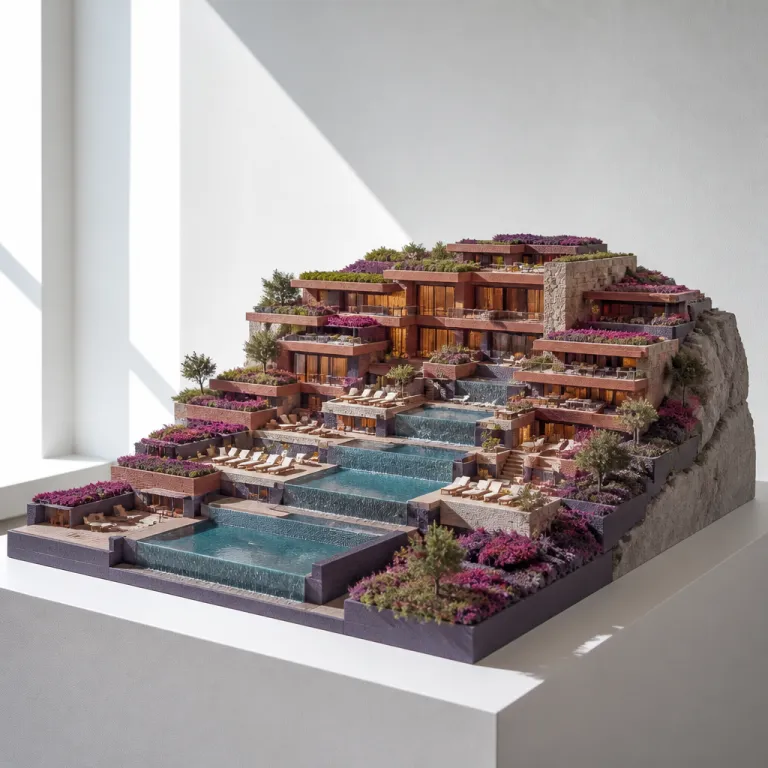
The new language of luxury hotel landscape architecture design 2026
Luxury hotels built into the landscape now define the sharp edge of global hospitality, and the most interesting properties feel quietly inevitable rather than loudly iconic. The leading architecture firms talk less about statement façades and more about how a hotel resort can vanish into rock, forest, or coastline while still delivering the best guest experience money can buy. For travelers using a premium booking website, this shift means that the main content to study is no longer just room size or thread count, but how deeply the architecture design and the surrounding landscape architecture are entwined.
Across the world, a new generation of studios treats every project as a long term conversation between architecture, interiors, and ecology. At ULUM Moab near Looking Glass Arch in Utah, tented structures sit low against the desert, and the resort design strategy uses muted products and restrained interior design so that the red rock remains the visual protagonist. Cloudland at McLemore in Georgia, by contrast, clings to Lookout Mountain, where the planning and architecture landscape work together to frame vertiginous views while keeping the hotel and its interiors visually recessive from the valley below.
This is where luxury hotel landscape architecture design 2026 becomes a useful lens for choosing where to stay, because it captures a full design process rather than a single aesthetic trend. Hann Lux Lifestyle Resort in New Clark City, shaped by WATG and Wimberly Interiors, stretches across 420 hectares and shows how one company can orchestrate hotels resorts, hospitality residential enclaves, and golf courses into a coherent landscape architecture narrative. When you compare these projects with more conventional hotels, you start to see how hospitality design now prizes belonging over bravado, and how a carefully edited hospitality interior can make a guest feel part of a place rather than parked beside it.
Designing with the land, not on it
The most compelling luxury hospitality properties today are planned as if the land were the first client and the guest the second. Architects and landscape architecture teams walk sites for months before any studio commits a line to paper, mapping wind, light, and water so that the eventual hotel resort feels like a continuation of existing contours. This design process is slower and more expensive at the outset, but it pays back over the long term in both guest experience and operational efficiency.
At Tella There in Crete, a five star resort threaded through ancient olive groves, the architecture design sinks into the terrain with green roofs planted with young olive trees that echo the older landscape. Here, the hospitality interior is deliberately calm, with low slung interiors and natural products that defer to the silvery foliage outside, so that guests read the resort as part of the grove rather than an interruption. Zannier Île de Bendor in France follows a similar strategy, using terraced gardens, limewashed walls, and local stone to step gently down to the sea, while cross ventilation and shaded courtyards reduce the need for aggressive mechanical cooling.
For travelers scanning a booking platform, this approach to architecture interiors changes what “the best room” means, because the prize is no longer the highest floor but the space most deeply embedded in the landscape. Amangiri in Utah, for example, uses monolithic concrete volumes that match the surrounding mesas, and every interior design move is calibrated so that the desert reads as an extension of the room. When you evaluate hotels through the lens of luxury hotel landscape architecture design 2026, you start asking how the firm behind the project has allowed the land to lead, and whether the planning strategy respects the site as much as it serves the guest.
Material honesty, climate intelligence, and the energy argument
Material choices in luxury hospitality now carry as much narrative weight as any dramatic lobby staircase. When a company commits to local stone, reclaimed timber, and indigenous planting, it is making a statement about both hospitality design ethics and long term operating costs. Buildings that work with climate rather than against it can reduce energy use significantly, which matters when you are running hotels resorts with high expectations for comfort.
Zannier Île de Bendor’s use of local stone and timber is not just an aesthetic gesture ; the thermal mass of thick walls and the permeability of shaded terraces stabilize interior temperatures naturally. Cross ventilation, carefully oriented openings, and deep overhangs mean that the architecture landscape partnership does much of the cooling work before any air conditioning system switches on. At Tella There, green roofs over low rise volumes add insulation, while the landscape architecture absorbs heat during the day and releases it slowly at night, smoothing temperature swings across the resort.
For guests, the result of this climate intelligent architecture interiors approach is quietly tangible, because comfort feels effortless rather than forced. You notice that your room at ULUM Moab stays surprisingly temperate despite the desert sun, or that the hospitality interior at Cloudland at McLemore feels fresh without a constant mechanical hum. From a booking perspective, properties that embody luxury hotel landscape architecture design 2026 often communicate their energy strategy clearly, and this transparency is becoming a marker of the best global hospitality practice rather than a niche sustainability badge.
Landscape architects as co authors of the stay
In the most interesting projects, landscape architects are not brought in to “soften” a finished hotel but to co author the entire experience. The garden, the paths, and the topography become as central to hospitality interior storytelling as any lobby or suite, and the line between inside and outside blurs into a single piece of design. For travelers, this means that choosing a hotel is increasingly about choosing a landscape to inhabit, not just a building to sleep in.
Hann Lux Lifestyle Resort is a clear example, where WATG and Wimberly Interiors, often referred to together as WATG Wimberly, orchestrate a group hospitality vision across multiple valleys and ridges. Here, landscape architecture shapes everything from arrival sequences to the placement of villas, and the interiors echo the planting palette with natural fibers and earth toned products. At ULUM Moab, the resort design leans on minimal disturbance of the desert crust, with raised walkways and tent platforms that allow water to flow and native plants to remain, so the guest experience feels like camping elevated by hospitality design rather than a conventional hotel imposition.
This co authorship changes how you move through a property, because the architecture landscape choreography guides you toward views, breezes, and moments of privacy. Paths are curved to reveal the horizon slowly, pools are tucked into natural depressions, and even small hospitality residential clusters are oriented to share light without sacrificing discretion. When you read about luxury hotel landscape architecture design 2026 on a booking site, pay attention to how often the landscape architect is credited alongside the architecture firm, because that usually signals a deeper integration of place and stay.
How integration reshapes the emotional guest experience
Privacy, proportion, and discretion are now central to the luxury conversation, and architecture that belongs to the land delivers these qualities almost by default. When a hotel is carved into a hillside or threaded through a forest, neighbors fall away, and the guest feels held by the terrain rather than exposed to it. This is why properties like Amanvari, often cited as exemplars of quiet seclusion, resonate so strongly with travelers who value emotional calm over spectacle.
Landscape integrated hotels also answer a growing demand for hyper local authenticity, because luxury now demands a deeper sense of place that no amount of imported marble can fake. At Piaule Catskill in New York, freestanding cabins sit on slender stilts among the trees, and the interiors frame the forest as living art, so the hospitality interior becomes a lens on the Catskills rather than a generic design statement. Amangiri achieves something similar in the desert, where the architecture interiors use sand toned concrete and stone to make the line between pool, terrace, and canyon almost imperceptible.
For solo explorers, this level of integration can be quietly transformative, because the guest experience shifts from consuming amenities to inhabiting a landscape. You might spend an afternoon moving between a shaded terrace, a rocky outcrop, and a calm interior design reading nook, all within a few meters yet across distinct micro worlds. If you are interested in how public spaces support this emotional arc, look for properties that rethink communal areas as extensions of the terrain, a topic explored in depth in our feature on how hotel public spaces are being redesigned.
Reading between the lines on booking sites
When you scroll through a luxury and premium booking website, the properties that embody luxury hotel landscape architecture design 2026 rarely shout about it in a single headline. Instead, you will see clues scattered through the main content, from mentions of landscape architecture partnerships to notes about local stone, indigenous planting, or cross ventilation. Learning to read these signals helps you separate hotels that simply borrow a natural backdrop from those that are genuinely built into their surroundings.
Start by looking at the design section of each listing and noting whether the architecture firm and landscape studio are both named, because serious global hospitality projects treat these disciplines as equals. References to WATG, Wimberly Interiors, or other firms known for hotels resorts and hospitality residential work often indicate a rigorous design process behind the images. Pay attention to whether the hospitality interior is described in relation to the outside world, with phrases about framing views, echoing local materials, or extending terraces into the landscape, rather than just listing products and finishes.
It also helps to cross check sustainability notes, because properties that work with climate usually explain how their architecture interiors reduce energy use and support long term stewardship of the site. Some listings will mention that the resort design preserves existing trees, uses reclaimed timber, or integrates water sensitive planning, all of which signal a deeper commitment than surface level greenwashing. As one expert summary puts it, “A hotel designed to blend seamlessly with its natural surroundings.”, and that simple definition remains a reliable filter when you are choosing where to stay next.
Where architecture ends and the landscape begins
The most memorable stays in luxury hospitality now come from hotels where you genuinely cannot tell where the building ends and the landscape begins. At Amangiri, the pool wraps around a natural rock outcrop, and the architecture design steps down with the canyon so subtly that your eye stops looking for edges. ULUM Moab takes a lighter touch, with tented structures that float above the desert floor, yet the guest experience is still one of immersion rather than separation.
Cloudland at McLemore uses its mountain edge site to similar effect, with terraces that appear to grow from the cliff and interiors that keep glazing lines low, so the sky and valley dominate every frame. Hann Lux Lifestyle Resort stretches this idea across a vast site, where different hotels resorts and hospitality residential clusters are stitched together by continuous landscape architecture rather than isolated by roads. In each of these projects, the company behind the development has treated resort design as a single, continuous piece of architecture landscape, not a collection of objects dropped onto a masterplan.
For travelers, this means that the benchmark for the best properties has shifted from visible opulence to invisible integration, and the quietest projects often deliver the richest memories. When you next browse a booking site, look for images where paths, pools, and interiors seem almost too natural, as if they have always been there, because that is usually where luxury hotel landscape architecture design 2026 thinking has taken root. Over time, as more firms and studios adopt this strategy, the line between hotel and habitat will continue to blur, and the most successful projects will be those that feel less like arrivals and more like returns.
Key figures shaping landscape integrated luxury hotels
- There are around 150 eco friendly luxury hotels worldwide, according to the Global Sustainable Tourism Council, which indicates a still niche but rapidly growing segment within global hospitality.
- Luxury eco focused hotels report an average occupancy rate of 85 percent, based on données from the International Luxury Hotel Association, significantly higher than many conventional hotels in comparable markets.
- ULUM Moab opened with a clear hospitality design strategy near Looking Glass Arch in Utah, reinforcing the trend toward landscape integrated resorts in remote natural settings.
- Cloudland at McLemore on Lookout Mountain in Georgia has been recognized as a five star hotel that leverages dramatic topography, underscoring how architecture landscape integration can become a commercial differentiator.
- Hann Lux Lifestyle Resort in New Clark City spans 420 hectares, showing how large scale planning and resort design can still prioritize landscape architecture and environmental sensitivity.
FAQ about luxury hotels built into the landscape
What defines a landscape integrated luxury hotel ?
A landscape integrated luxury hotel is a property where architecture, interiors, and outdoor spaces are designed together so that the building appears to grow from its surroundings. The goal is to minimize visual and environmental impact while maximizing guest immersion in the landscape. As one expert definition states, “A hotel designed to blend seamlessly with its natural surroundings.”
Are landscape integrated hotels more expensive to stay in ?
Prices vary widely, but many landscape integrated hotels position themselves at the upper end of luxury hospitality because of their remote locations, low density planning, and high design costs. The long term operational savings from climate responsive architecture can offset some expenses, yet nightly rates usually reflect the exclusivity of the experience. When comparing options, check what is included, from guided nature activities to wellness products, to understand the full value.
How do these hotels reduce their environmental impact ?
Landscape integrated hotels typically use sustainable architecture strategies such as local materials, passive cooling, and careful water management to reduce their footprint. Many work with environmental consultants and landscape architecture teams from the earliest planning stages to protect existing ecosystems and restore degraded areas. Guests can support these efforts by respecting marked paths, conserving water, and engaging with on site education programs.
Do landscape integrated hotels always feel remote and isolated ?
Not necessarily, because the sense of seclusion often comes more from design than from distance. Some properties, like Piaule Catskill, sit within a few hours of major cities yet feel deeply removed thanks to careful siting and architecture interiors that prioritize privacy. When booking, look at travel times as well as site plans to decide whether you prefer true remoteness or accessible immersion.
How can I evaluate design quality from a booking website listing ?
Focus on how the listing describes the relationship between the hotel and its surroundings, not just the interiors. Mentions of landscape architecture partners, local materials, cross ventilation, and preserved vegetation are strong indicators of serious design intent. Comparing several properties side by side will quickly reveal which ones treat the land as a backdrop and which ones, in the spirit of luxury hotel landscape architecture design 2026, treat it as the main character.